By Mikk Orglaan
Latitude59: why investor, founder and HR speak completely different languages about the team
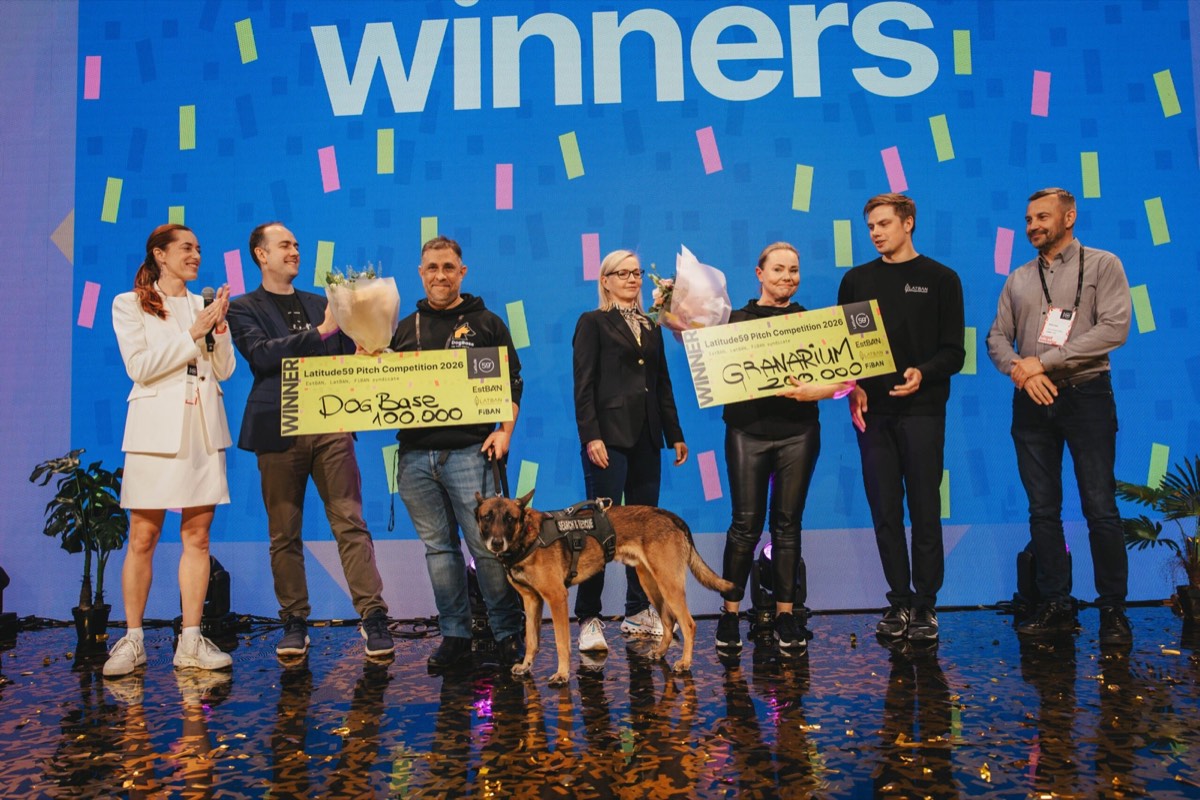
Latitude59 is one of the flagship events in the Estonian startup world. It brings to Tallinn a lot of local and neighbouring-country startups, investors, accelerators and ecosystem people.
This time too there were a lot of people. Maybe in volume slightly fewer than in some earlier years, because there are already so many events that nobody can make it everywhere anymore. But the people who were there were the right ones. And the conversations were valuable.
This time I was at Latitude59 again as a startup, not as an investor.
And that changed the perspective quite a lot.
Investors were looking for investment opportunities. We were looking for customers.
The state of Sparkly HR right now is that we're not actively looking for an investor. We're primarily looking for customers.
That means we didn't get as much good contact with investors this time as one might have hoped. Not because there was no interest, but because the focus was different.
Investors were there with a very concrete goal: to find startups to invest in.
For Sparkly HR it's currently more important to find companies that genuinely need to understand: whether they need HR at all; what HR should actually be doing in their company; where role confusion appears; how AI is changing the distribution of work between people; and how to make better decisions about people with less risk and less gut feeling.
That's a different buying moment. A different conversation. A different problem.
Bolt, HR and one very necessary uncomfortable question
During Latitude59 a recent article about Bolt also came up, talking about the role of HR and how bad HR can start creating problems that it then tries to solve itself.
It made me think.
Not because HR is bad. But because in very many companies it's not actually fully clear what HR is supposed to do, when it's needed, and when HR itself becomes a brake on the system.
Out of this also came a blog post on the Sparkly website, where we sharpened our position: Sparkly does not compete with good HR. Sparkly helps the entrepreneur, the manager and HR see where work, role, responsibility and person don't fit.
That distinction matters.
Good HR helps the company. Bad HR produces process. Sparkly helps make visible where the real problem sits.
2026 keyword: role confusion
AI is going to change a lot in companies in 2026.
Not just because AI does some work faster. But because AI takes parts of the work out of roles. That means the job title can stay the same, but the actual content of the work changes.
And when the content of the work changes, expectations on the person change too.
From here a new big problem appears: role confusion.
Who actually does what? What work stays with the person? What work moves to AI? What responsibility stays with the manager? What responsibility stays with HR? What responsibility belongs to the team itself?
If this isn't looked at consciously, an invisible confusion grows inside the company. Everyone does something, but nobody knows anymore exactly whether it's the right work, in the right person's hands, with the right value.
Three target groups, three completely different worlds
Latitude59's biggest lesson for Sparkly was that investors, entrepreneurs and HR/recruiters don't see the same problem the same way at all.
They live in what feel like three different worlds.
The investor looks at the team as risk. Will the founders deliver? Can the team scale? Will conflicts tear the company apart before the market opens?
The entrepreneur looks at people through outcomes. Who gets it done? Who doesn't? Who do we need more of? Why are things moving too slowly? Why don't people take responsibility?
HR and recruiters look at the person through process. How do we find, evaluate, retain, develop and support people so that the company works better?
All of them are talking about people. But they're not actually talking about the same thing.
And that's exactly the problem.
Positioning became clearer
Latitude59 gave Sparkly a very important reflection: we cannot speak the same language to everyone.
The investor wants to see team risk. The entrepreneur wants to see the business damage and the practical solution. HR wants to see a tool that doesn't take value away from them but helps them make better decisions.
If you try to speak to everyone at once with the same message, it doesn't hit anyone precisely enough.
That was one of the biggest conclusions.
We previously thought the difference between target groups wasn't this painful. It actually is. Their behaviour, questions and buying logic are radically different.
And more than that: often one target group doesn't even have the capacity to fully see the worry of another target group.
An investor doesn't think like HR. HR doesn't think like an investor. The entrepreneur doesn't think like either.
Sparkly has to take that into account.
Fewer meetings, more substantive reflections
All in all, Latitude59 was this time more of a walking, random-conversations and reflections event than a tightly planned meeting marathon.
But that doesn't make it less valuable.
Sometimes the best outcome doesn't come from one specific meeting. It comes from ten different conversations that all show the same thing from a slightly different angle.
This time those conversations gave Sparkly several small but important shifts.
Especially in how we talk about HR, roles, the impact of AI and decisions about people to different target groups.
What Latitude59 ultimately gave
This time Latitude59 wasn't an investor-finding event for Sparkly.
It was a positioning-sharpening event.
We got confirmation that the topic of people, roles and responsibility is becoming more and more important in companies. Especially in the AI era, where an old job title no longer necessarily means the old content of the work.
We also got confirmation that Sparkly's value has to be explained differently to different target groups.
For the investor it's team risk. For the entrepreneur it's money, responsibility and outcomes. For HR it's better visibility and smarter decisions.
And that's perhaps Latitude59's most valuable outcome: not one specific contact, but a much clearer understanding of who we actually need to say what to.